
Dialing Within Utah
Along the Wasatch Front, every local call takes all ten digits. Two calling codes share that ground, so the seven digits on their own no longer point at a single line. The rule became mandatory in June 2009 and it applies to any call inside the 801 and 385 region. In 435 territory, where one code covers the whole area, some exchanges may still connect a shorter local call, though that depends entirely on the carrier. Dialing ten digits works statewide, which is why every directory in Utah prints them that way.
The phone code you put in front changes by call type. A 1 marks a toll or long-distance call on many lines. Three zeros and a one, dialed as 011, opens an international call from a landline. A short service code replaces the whole number.
| Call Type | Phone Code Format | Example |
|---|---|---|
| Local within the 801 and 385 region | Ten digits, area code first | 801-538-7500 |
| Local within 435 | Ten digits is safest, seven may still work on some lines | 435-797-1939 |
| Long distance inside the country | 1 plus the ten digits | 1-801-965-4437 |
| Toll-free | 1 plus a toll-free code plus seven digits | 1-800-222-1222 |
| International from a landline | 011 plus country code plus number | 011 plus the destination |
| Service line | A single three-digit phone code | 988 |
Note: storing every Utah contact with all ten digits avoids the one mistake that still fails on the Wasatch Front.
N11 Service Phone Codes in Utah
These are the shortest phone codes in use, three digits that skip the number entirely. Two of them carry real weight in Utah. 988 reaches the Suicide and Crisis Lifeline and routes Utah callers to the Utah Crisis Line, free and confidential at any hour by call, text, or chat. 211 reaches community services, which in this state means a searchable database plus a specialist on the phone. 311 is the odd one out here, because Utah has no statewide version of it.
| N11 Phone Code | What It Reaches in Utah |
|---|---|
| 211 | Utah 211 for housing, food, utility help, health, and nonprofit referrals. You can also text a ZIP code to 801-845-2211 |
| 311 | City services where a local government runs it. There is no single statewide Utah service behind this code |
| 411 | Directory assistance from your own carrier, usually with a charge attached |
| 511 | The travel information code. Utah drivers get more from the UDOT Traffic site and app, which run around the clock |
| 611 | Repair and customer service at whichever carrier owns your line |
| 711 | Relay Utah for deaf, hard-of-hearing, and speech-impaired callers. Spanish relay is 1-888-346-3162 |
| 811 | Utility locating before digging, trenching, fencing, or landscaping |
| 911 | Police, fire, and medical emergencies |
| 988 | Suicide and Crisis Lifeline, answered in Utah through the Utah Crisis Line |
The 211 phone code has more behind it than a call. The Utah 211 service publishes its whole directory online alongside the phone and text options.
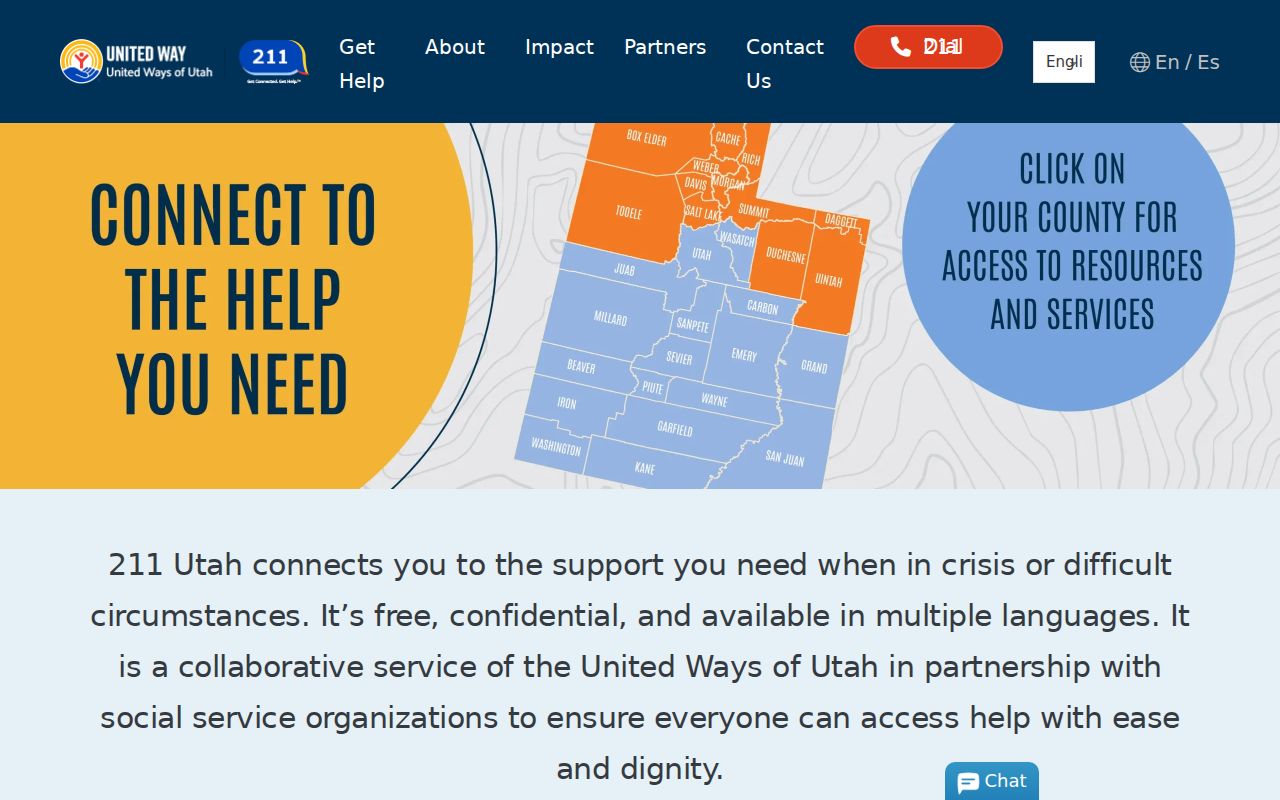
That matters when the phones are busy or you would rather read than talk. Keep 811 straight from the emergency lines while you are here. It marks buried utilities days ahead of a project. A gas leak or a downed wire still goes to 911 and the utility emergency number.
Star Phone Codes on Utah Lines
Star codes are the oldest trick in the book and they still work on plenty of Utah lines. You dial the star, two digits, and the switch does something to your call instead of placing one. Support varies. Traditional landlines handle nearly all of them, mobile carriers handle some, and internet phone systems vary by provider. A code that does nothing on your line simply is not enabled, and the carrier can say which ones are.
| Star Phone Code | Action |
|---|---|
| *57 | Marks the call that just ended so the carrier keeps a record of its origin. Meant for threatening calls, and it works with a police report rather than instead of one |
| *60 | Builds a rejection list, so specific numbers stop coming through |
| *67 | Keeps your number off the display for the single call you place next |
| *69 | Dials whoever rang last. Blocked and spoofed numbers defeat it, and some carriers charge for it |
| *70 | Silences call waiting for one call, which is handy for a fax or a call you cannot have interrupted |
| *72 | Begins forwarding, then waits for the number that should ring in place of yours |
| *73 | Ends forwarding and sends calls back to your own line |
| *77 | Turns away callers who hide their caller ID |
| *82 | Reveals your number for one call, which gets you through lines that refuse blocked callers |
Utah Area Phone Codes
The three digits at the front of a full number are phone codes too, and they are the ones people mean most often. Utah runs three of them. Two share the same territory because the newer one was added as an overlay, and the third covers everything outside that corridor. That arrangement is the whole reason the ten-digit rule exists here.
- 801 - the original Utah code from 1947, now limited to the Wasatch Front
- 385 - the overlay added in 2008, covering exactly the same ground as 801
- 435 - split off in 1997 for the rest of the state, from Logan to Moab to St. George
Regional detail, coverage by county, and the split and overlay history all live on the Utah area codes page. For dialing purposes, the only thing that matters is that all three are real Utah codes and all three are safest dialed in full.
Toll-Free Phone Codes
Toll-free codes flip who pays. The business or agency at the other end covers the call, which is why so many state help lines publish one alongside a local number. Utah examples are everywhere, from 888-353-4224 for driver licenses to 866-435-7414 for eligibility questions and 800-874-0904 for utility complaints. Each toll-free code was released as the previous one filled up, which is the only reason there are seven of them.
| Toll-Free Phone Code | Rolled Out |
|---|---|
| 800 | 1967, the original |
| 888 | 1996 |
| 877 | 1998 |
| 866 | 2000 |
| 855 | 2010 |
| 844 | 2013 |
| 833 | 2017 |
Two other prefixes are worth recognizing for the opposite reason. A 900 number bills the caller at a premium rate, and 976 did the same thing on some local exchanges years ago. Neither is common now, but a call that asks you to dial one deserves suspicion.
Country Code and International Phone Codes
Utah sits inside the North American Numbering Plan, which shares a single country code of +1 with the rest of the United States, Canada, and about two dozen territories. That phone code almost never comes up in daily use here. It matters in two places. Someone dialing Utah from abroad needs it, and a stored contact written as +1 801 538 7500 will dial correctly from anywhere in the world. Writing numbers that way is a small habit that saves trouble when you travel.
- Calling out from a Utah landline: dial 011, then the country code, then the local number.
- Calling out from a mobile in Utah: hold the 0 key for a plus sign, then the country code, then the number.
- Calling into Utah from abroad: dial that country's exit code, then 1, then the full ten digits.
Exchange Phone Codes in Utah
The middle three digits are the exchange, and they count as a phone code in their own right. In 801-535-7704, the exchange is 535. Every Utah number has one. Historically it pointed at a specific switch building and a rate center, which is why blocks of numbers still cluster by institution. State offices sit in 801-538. The University of Utah answers on 801-581 and 801-585. Salt Lake County government runs through 385-468, Utah County through 801-851, and Utah State University through 435-797.
Those patterns are useful and unreliable at the same time. Number portability lets a line keep its exchange when it moves to a new carrier or a new city, and pooling hands out blocks in smaller pieces than it used to. Public exchange records will tell you that 385-243 was assigned in Bountiful or 385-262 in Kaysville, which is real information about where a block started. It is not information about who is holding the phone today.
Phone Codes for Blocking Unwanted Calls
Star codes handle one call at a time. For the steady stream, the national registry is the tool that carries legal weight. Registering is free and covers landline and mobile numbers alike, and once a number has been listed, legitimate telemarketers have to leave it alone. The Do Not Call Registry handles both registration and verification.
Registration does not stop everything. Political calls, charities, surveys, debt collectors, and companies you already do business with are all outside it. Illegal scammers ignore it entirely, which is precisely why continued calls are worth reporting. The FTC reporting form takes the details.
Have the calling number, the date and time, and what was being sold ready before you start. Utah adds its own channels on top: consumer fraud goes to the Division of Consumer Protection at 801-530-6601, and utility calls go to the Division of Public Utilities at 801-530-7622. Using a number to look up who called is covered on the Utah phone numbers page.
Caller ID Labels on Utah Calls
The label that says Likely Spam or Scam Likely is not a phone code, but people read it like one. It comes from caller ID authentication, a framework the FCC requires carriers to use as calls pass between networks. Each handoff gets a digital signature saying whether the calling number can be trusted. Carriers combine that signal with their own analytics, call volume, and customer complaints to decide what warning to show.
It helps and it is not proof. A legitimate Utah office can get flagged after a burst of outbound calls, and a spoofed number that looks perfectly local can still slip through with no warning at all. Complaints feed the system, which is part of why filing one matters. The FCC Consumer Complaint Center takes reports about robocalls, spoofing, and unwanted texts.
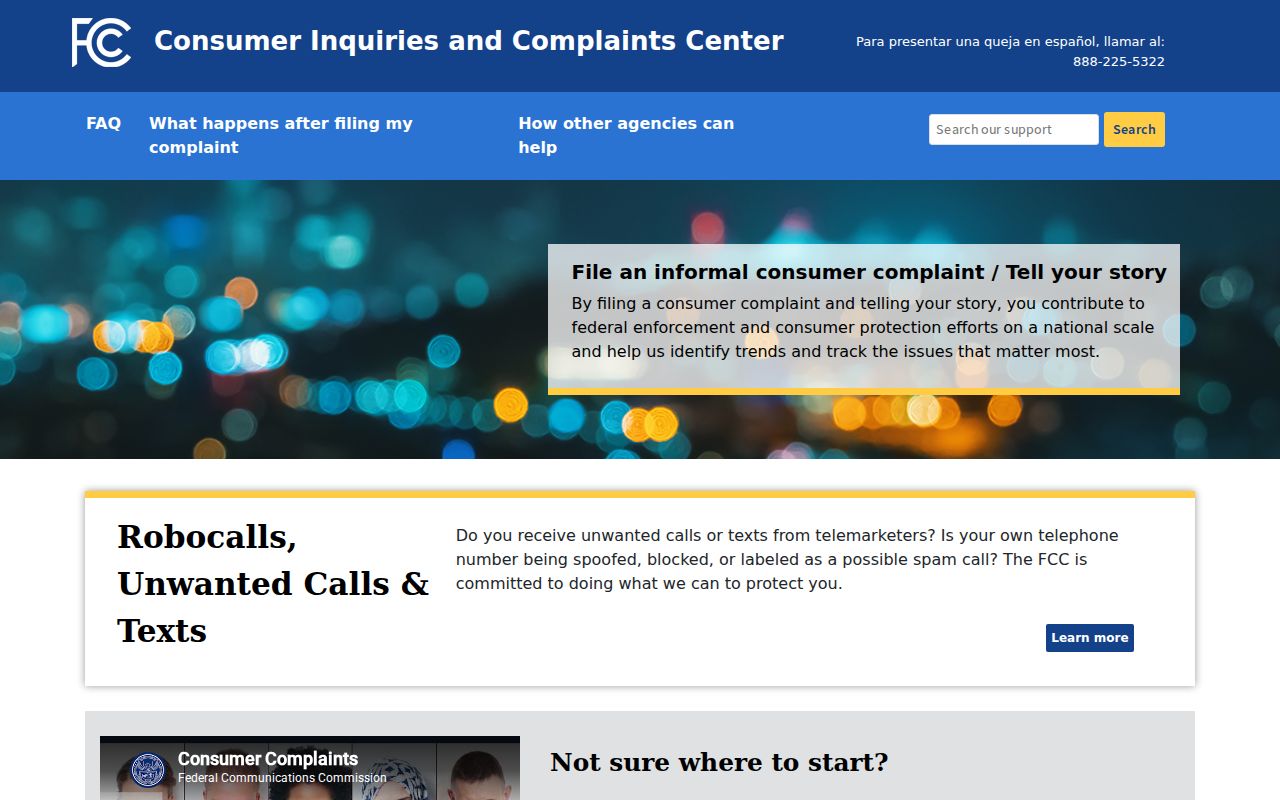
The form asks what happened, which number called, and who your provider is. Whatever the label says, the safe move with any caller demanding money is the same one: hang up and call the agency back on a number you looked up yourself.
Phone Code Definitions
A handful of terms cover every kind of Utah phone code above.
- NPA
- The technical name for an area code, the first three digits of a full number. Utah has three.
- NXX
- The exchange, meaning the second group of three digits, once tied to a switch building.
- N11
- A three-digit service code that replaces a whole number, such as 211, 811, 911, or 988.
- Star code
- A star followed by two digits that tells your own line to do something rather than placing a call.
- Toll-free code
- A leading code that shifts the cost of the call to whoever is being called.
- NANP
- The shared numbering plan behind country code +1, covering the United States, Canada, and other territories.
How to Look Up a Utah Phone Code
Two federal sources answer nearly every question about a phone code. NANPA administers the numbering plan itself and publishes area code assignments, maps, and the planning letters behind every change. The FCC keeps consumer-facing references for the same material and runs the complaint side. Between them you can confirm whether a code is genuine, which state it belongs to, and where to report a call that misused it.