
Area Codes Serving Utah
Three codes are in service across Utah: 801, 385, and 435. Only two territories exist, though, because 385 sits on top of 801 rather than beside it. That leaves the Wasatch Front sharing a pair of codes and the rest of the state on a single code. Salt Lake City, Ogden, Provo, Orem, Sandy, West Jordan, West Valley City, Layton, Bountiful, and Murray fall in the shared zone, along with the rest of Salt Lake, Davis, Weber, Utah, and Morgan counties. Everywhere else, from Cache Valley down to the red rock, answers on 435.
Ten-digit dialing is required through the shared zone and has been since 2009. Nothing in the table below has changed since then, and no fourth code has been assigned. The columns matter in a specific order. Coverage tells you where a number was issued, the year tells you how old that assignment is, and the last column tells you whether the code has territory of its own.
| Area Code | Coverage | Year Assigned | Overlay Status |
|---|---|---|---|
| 801 | Wasatch Front only since 1997: Salt Lake City, Ogden, Provo, Orem, Sandy, West Jordan, West Valley City, Layton, Bountiful, Murray, South Jordan, Spanish Fork, American Fork, Lehi | 1947 | Original code, now shares its map with 385 |
| 385 | Exactly the same ground as 801, across Salt Lake, Davis, Weber, Utah, and Morgan counties | 2008 | Overlay on 801, mandatory ten-digit dialing since 2009 |
| 435 | The rest of Utah: St. George, Logan, Park City, Moab, Cedar City, Price, Vernal, Richfield, Tooele, Blanding, Kanab, and most county seats | 1997 | Geographic split from 801, no overlay |
Note: an 801 number and a 385 number can ring in the same building, so the code says nothing about which line is older or newer.
Utah Area Code Coverage by Region
The line that divides Utah follows telephone geography rather than anything you would recognize from a road map. It runs close to the edge of the Wasatch Front population corridor, but rate centers drew it, not city limits or county lines or tourism regions. Two neighboring towns can end up in different codes if the exchanges serving them were assigned separately. The NANPA area code map library is the authority when you need to see the boundary drawn out.
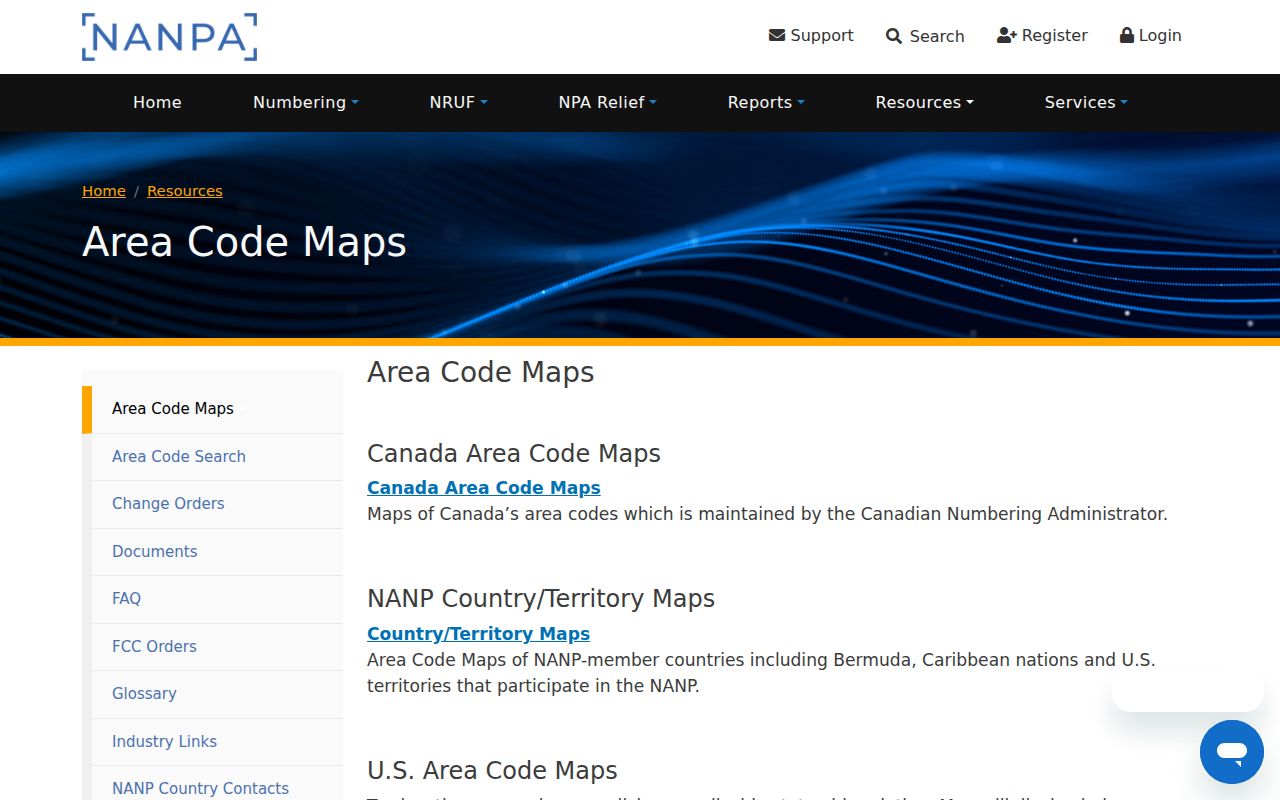
Those maps are published per state and updated as codes change. For everyday purposes the regional split below is close enough, with the warning that a ported number carries its old code wherever its owner goes.
- Salt Lake Valley - Salt Lake City, Murray, Sandy, West Jordan, South Jordan, West Valley City, all on 801 and 385
- Davis and Weber counties - Ogden, Layton, Bountiful, Kaysville, on 801 and 385
- Utah County - Provo, Orem, Lehi, American Fork, Spanish Fork, on 801 and 385
- Cache Valley and the north - Logan and Brigham City, on 435
- Summit, Wasatch, and Tooele - Park City and Tooele, on 435
- Southern Utah - St. George, Cedar City, Kanab, on 435
- Eastern and southeastern Utah - Price, Vernal, Moab, Blanding, on 435
Utah ZIP codes give a rough second opinion. Salt Lake City sits in the 841xx range, southern Utah in 847xx, and the eastern side in 845xx, with Park City at 84060, Moab at 84532, Vernal at 84078, and Price at 84501. That association is a clue about where a number started, never proof of where the phone is now.
Overlay and Split in Utah
Utah has lived through both kinds of relief, which makes it a good place to see the difference. In 1997 the state took a split. The map was cut, the Wasatch Front kept 801, and everyone outside it moved to 435. Phone numbers changed and stationery got reprinted. In 2008 the state took an overlay instead. Nobody changed a number, and 385 simply began filling new orders across the same territory 801 already served. The cost of that softer approach was the dialing rule, because two codes sharing one map means seven digits can no longer identify a line on their own.
- Overlay
- A fresh code poured over territory that already has one. Existing lines keep their digits, new lines draw from either code, and every local call needs the area code.
- Split
- The map gets cut in two. One side holds onto the familiar code and the other side is issued a new one, which means reprinting anything that carried the old number.
- Permissive dialing
- The grace window when the old habit and the new one both connect, so people can adjust before the switch is thrown for good.
- Exhaust
- The point where an area code runs out of unassigned blocks, which is what forces either kind of relief.
Dialing Rule for Utah Numbers
Ten digits, area code first, for local calls anywhere in the 801 and 385 region. Public notices told customers to start dialing that way on June 1, 2008, and the requirement became mandatory in June 2009. Out in 435, where no overlay exists, some exchanges may still complete a seven-digit local call depending on the carrier. That is worth knowing but not worth relying on, because mobile phones, business systems, and stored contacts all use ten digits anyway.
Important: Local calls in the 801 and 385 area have needed all ten digits since June 2009. A seven-digit attempt there will not connect.
Long distance still takes a 1 in front of the ten digits on many lines, and toll-free calls follow the same pattern. Three-digit service codes, star codes, and the country code work differently again, and the Utah phone codes page covers each of those in turn.
History of Utah Area Codes
801 arrived with the original numbering plan in 1947 and held all of Utah for half a century. Pagers, fax machines, second lines, and then mobile phones ate through the supply. NANPA planning letters record the split of the Utah numbering plan area in May 1997, with 435 in service that September. The state then spent years planning a second round of relief that kept changing shape. A 2004 planning letter suspended a proposed 801 and 385 split outright because conservation measures had pushed exhaust further out.
What came back in 2007 was different. Regulators had considered cutting the Wasatch Front again, leaving Salt Lake County on 801 and moving Weber, Davis, and Utah counties to 385, which would have produced an awkward ring around the middle of the state. The Public Service Commission reversed that plan and chose an overlay instead. The NANPA planning letter archive holds the filings for each of those steps.
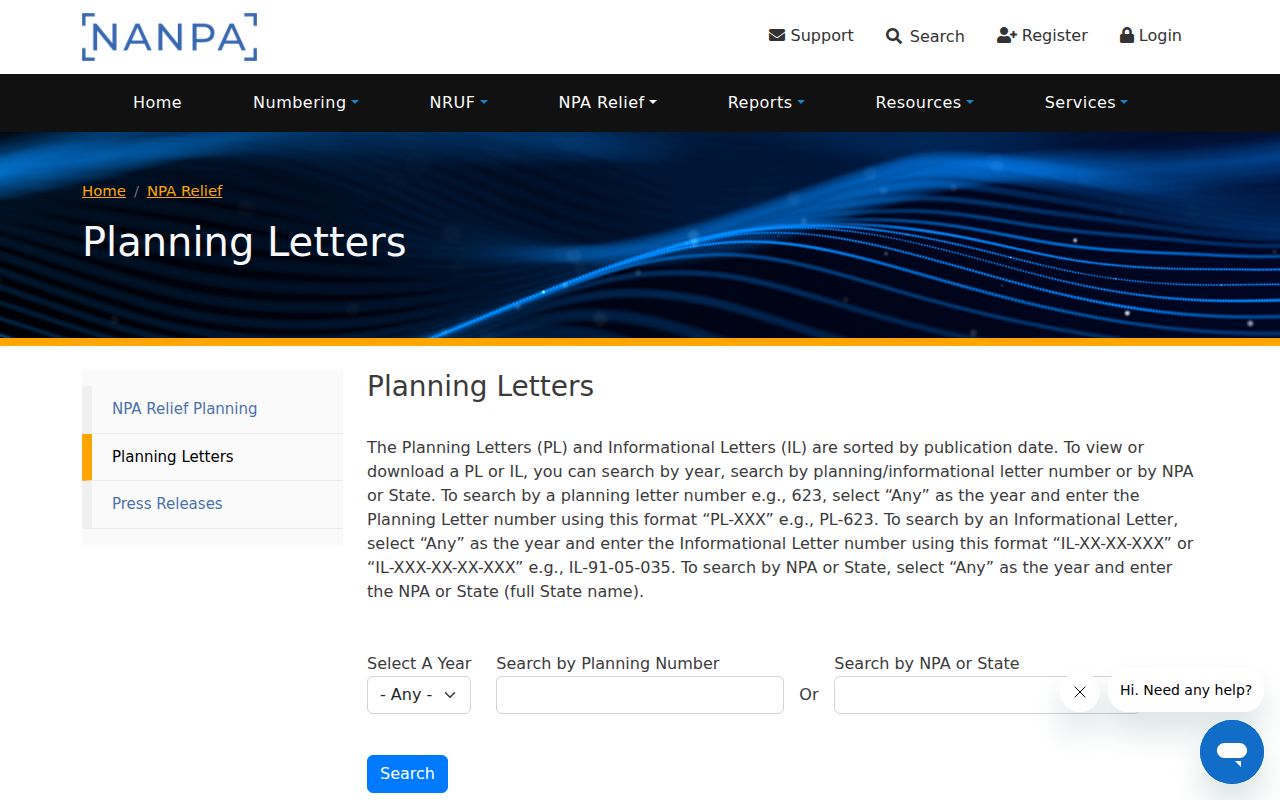
The archive filters by year, letter number, area code, and state, and it opens each document as a PDF without asking for a login. That makes it the cleanest citation for anything about Utah area code history.
| Year | Event |
|---|---|
| 1947 | 801 assigned as one of the original area codes, covering all of Utah |
| 1997 | Planning letter lists the split of the 801 area, and 435 goes into service that September |
| 2000 | State docket material begins discussing 801 exhaust and an 801 and 385 relief plan |
| 2004 | Planning letter PL-337 suspends the Utah split plan because conservation delayed exhaust |
| 2007 | Planning letters list 385 as an overlay of 801, and the state reverses the earlier split plan |
| 2008 | Overlay rollout begins and permissive ten-digit dialing starts on June 1 |
| 2009 | Ten-digit dialing becomes mandatory across the 801 and 385 region |
Utah Area Codes in Public Directories
Published Utah numbers show the history plainly. Older institutions cluster in 801 because they were assigned numbers when 801 was all there was. State government sits heavily in 801-538. The University of Utah answers on 801-581 and 801-585. Salt Lake City departments run through 801-535 and 801-596. The Driver License Division uses 801-965, the Tax Commission side of motor vehicles uses 801-297, Workforce Services sits in 801-526, and Utah County government in 801-851.
The newer code shows up where growth happened. Salt Lake County government is almost entirely 385-468, with additional 385 blocks behind newer county contacts. Out in 435, Box Elder School District answers on 435-734, Park City schools on 435-645, and Utah State University police on 435-797. These are patterns, not rules, and a spoofed caller ID can imitate any of them. Checking a number against the office that owns it is covered on the Utah phone numbers page.
Local Exchange Prefixes in Utah
The three digits after the area code are the exchange, sometimes called the prefix or the central office code. In 801-535-7704 the exchange is 535. Each exchange belongs to a rate center, which is a billing and geography unit rather than a neighborhood. Those assignments used to line up with a physical switch building in town. Thousands-block pooling, wireless carriers, and internet phone service have loosened that link considerably.
Public exchange records still exist and still help. Industry excerpt tools list a Utah exchange with its rate center, switch, and effective date, which is how you can see that 385-230 belongs to Provo, 385-243 to Bountiful, 385-249 to Salt Lake City, and 385-262 to Kaysville. Treat those as technical aids rather than government directories. The exchange tells you where a block was assigned, and portability means the current owner may sit somewhere else entirely.
Future Area Codes for Utah
Nothing new is on the books. No additional Utah relief code turned up in the NANPA planning letters reviewed for these pages, which means 801, 385, and 435 are expected to carry the state for now. That could change, and the two places it would show up first are NANPA relief planning and the Public Service Commission telecom docket. Watch both if you want early warning.
If a fourth code ever does arrive, the overlay experience says most residents will barely notice. Numbers already in service keep working. New lines pull from the new code. The dialing rule is already ten digits across the busiest part of the state, so there would be no habit to relearn there. Only the 435 region would see a real change, since that is the one place where a shorter local call may still go through.
Verifying a Utah Area Code
Two federal sources settle the question of whether a code is genuine. NANPA administers the numbering plan and publishes the assignment records behind every code in use. The Federal Communications Commission keeps a consumer-facing reference for the same material. Neither one will tell you who is calling. They tell you whether the code exists and which state it belongs to, which is often enough to spot a fake.
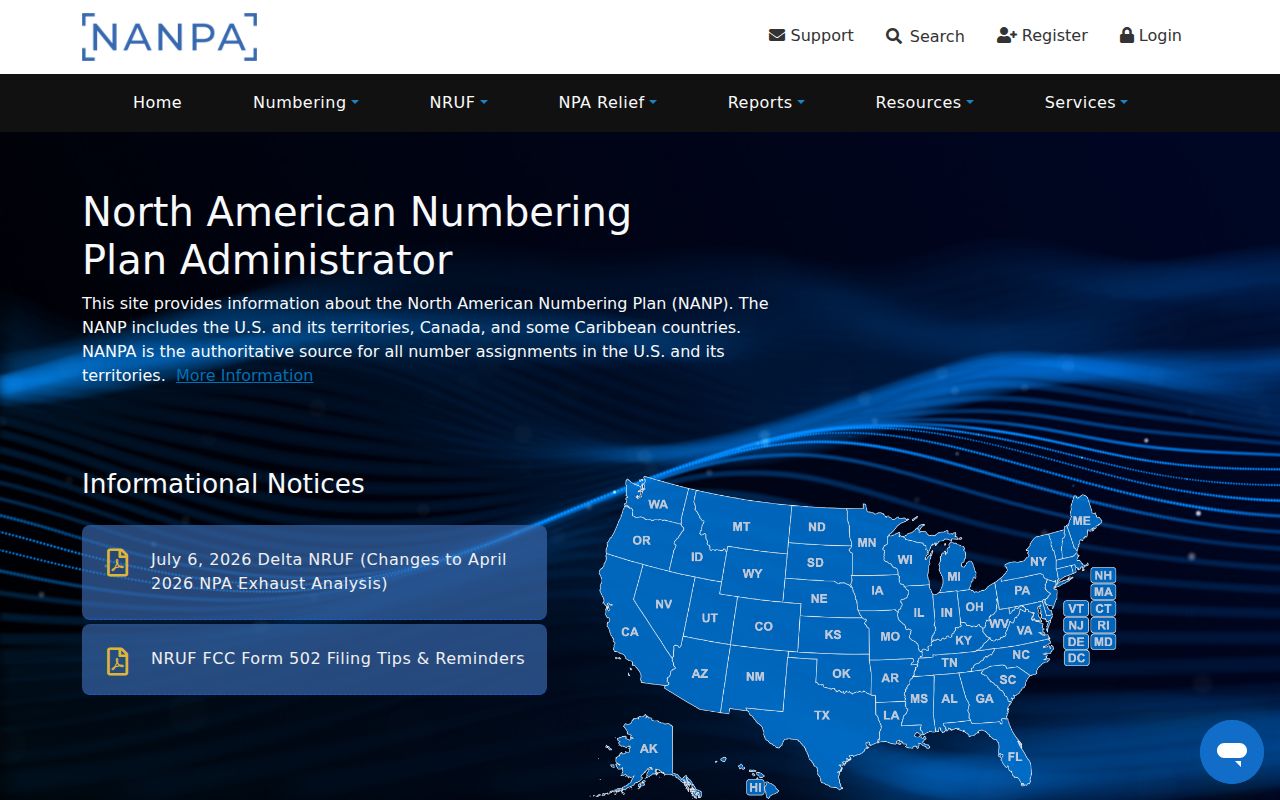
The NANPA site links its maps, planning letters, and code resources from one page, so it is the fastest starting point for any area code question.
- Confirm the three digits are a real code through NANPA, not a lookalike.
- Check which state the code belongs to and whether that matches the caller's story.
- Look up the office or company yourself and compare the published number.
- Call back on the number you found rather than the one you were given.